
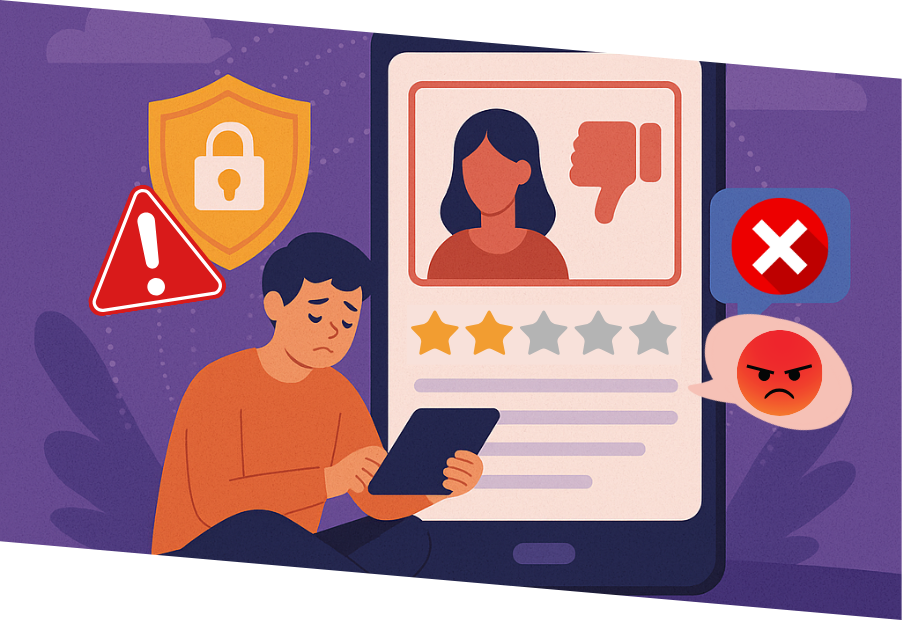
In today’s hyper-connected world, our online actions leave traces that can shape how others perceive us. Such perception can sometimes last for years, influencing various sectors of our lives, including mental health, personal relationships and professional opportunities. Digital reputation is not just about avoiding embarrassment or respecting platform guidelines; it’s about understanding the consequences that our actions on social media, online communities, and digital platforms have on our daily lives.
Yet, for many young people, although the risks of scams or hacking are widely heard of, the abstract nature of “online consequences” makes it hard to grasp how serious these impacts can be and how to specifically prevent them. This is where educational games like DigiCity come in, transforming vague concepts into an immersive and interactive experience with concrete and relatable representations of those consequences.
Misinformation and cyberbullying
In the upcoming DigiCity video game, players navigate a hyper-connected city where every choice, such as what to share, who to trust, and how to respond to misinformation, affects the narrative and relationships with other characters. The game focuses on a powerful example of defamation, where a character is falsely accused online through manipulated photos and captions posted on her hacked account, depicting her befriending and supporting an extremist group.
Players must investigate, analyse fake posts and edited pictures, identify credible or falsified sources and gather evidence to restore the victim’s reputation and prevent her from losing friends and a prestigious internship while attenuating the harsh backlash and cyberbullying she’s receiving from people who believe the defamatory posts. Through these mechanics, players directly experience the weight of misinformation and the impact of online behaviour, understanding that digital actions have real consequences for real people.
The psychology behind this activity is rooted in experiential and reflective learning. When players see the consequences of their in-game decisions and how their identification of false information influences the way a character is perceived and treated by others, it triggers emotional engagement, empathy, and critical thinking.
They are not simply told that keeping account settings open, sharing personal information, believing claims or responding aggressively can harm someone; through our game, they can feel it, strategise around it, and reflect on their choices while observing the impact such decisions have on a character who’s meant to be the player’s close friend. This empathic and experiential loop helps embed responsibility, digital empathy and media literacy in a way that traditional lectures often fail to achieve.
Collaboration and social consequences
Accompanying the video game, the DigiCity escape game reinforces these lessons by placing players in a cooperative problem-solving scenario. Participants must collectively navigate privacy breaches, digital footprints and account settings to track down and identify who is behind the defamatory campaign, then debate on whether to reveal the hacker’s identity publicly or report them to the authorities.
The need to collaborate and the discussion on the risks of publicly revealing the culprit’s identity amplifies the social consequences of digital decisions, teaching players about ethical decision-making and highlighting how online actions and data protection can affect communities, not just individuals. Doing so, youth learn that maintaining a responsible digital reputation is not only a personal responsibility but also a social one.
From play to real life
By combining narrative, challenge, and reflection, games like DigiCity provide a safe but environment for young people to explore digital ethics and understand that what they share online can be used to target them through defamation, hacking, identity theft or financial scams, affect their friendships and familial relationships, and influence whether they’ll be accepted in certain universities, hired or even fired from a job.
Through games, they safely learn to anticipate consequences, balance transparency and privacy, and act with integrity, along with critical thinking, problem-solving, data analysis, communication, and other skills that directly translate into real-life applications. In short, playing these games becomes a rehearsal for responsible citizenship in the real online world.
Digital reputation is more than a number of followers or random people’s distant perception of you; it’s a reflection of your choices, relationships, and ethics, which can affect your personal, interpersonal and professional life. When these lessons are embedded in gameplay, youth gain a deeper understanding of the meaning behind their online actions and the lifelong importance of cultivating a responsible, thoughtful, and ethical digital presence.
Discover the upcoming DigiCity games, along with our guide and articles, and help young people become better digital citizens through engaging and fun activities!
References:
- Image created with Canva.
- Chassiakos, Y. L. R., Radesky, J., Christakis, D., Moreno, M. A., & Cross, C. (2016). Children and adolescents and digital media. Pediatrics, 138(5), e20162593. https://doi.org/10.1542/peds.2016-2593
- (2025). How to stay safe online: Digital reputation. https://www.esafety.gov.au/key-topics/staying-safe/digital-reputation#how-does-my-digital-reputation-affect-me
- Kaufman, S. (2024). 7 Consequences of your digital footprint you need to know. https://www.aura.com/learn/what-are-the-consequences-of-a-digital-footprint
- Livingstone, S., & Haddon, L. (2009). Kids online: Opportunities and risks for children. Bristol University Press & Policy Press. https://doi.org/10.2307/j.ctt9qgvds.6
- Ribble, M., & Shaaban, A. (2011).