In today’s digitally driven world, where information flows ceaselessly through various media channels, the concept of media and information literacy (MIL) stands as a beacon of critical thinking forming the foundation of responsible digital citizenship. Often referred to by different names—digital media literacy, information literacy, or internet literacy—MIL encapsulates the ability not just to consume media and information, but to engage with it meaningfully and discerningly.
Media and information literacy is not just about understanding how media works. It’s about empowering individuals to be active participants in the digital age. By integrating MIL into educational frameworks, we ensure that future generations are equipped not only with technical skills but also with the critical faculties necessary to navigate and thrive in our information-rich world.
The ability to distinguish between factual and misleading information is paramount in nurturing responsible digital citizens. MIL encourages individuals, especially children and young people, to engage actively with media, not just for entertainment or recreation, but also for acquiring knowledge, fostering debate, and participating in civic discourse.
Media and information literacy encompasses a broad spectrum of competences essential for navigating the complexities of the digital age. It includes information literacy, which focuses on the ability to find, evaluate, and use information effectively; media literacy, which involves understanding media messages and their impact on society; and ICT/digital literacy, which pertains to the proficiency in using digital tools and technologies.
Despite the pervasive presence of digital media in our lives, schools often remain the primary arena where MIL is imparted. Here, young learners are equipped with the skills to critically assess and create information—a crucial foundation for their future roles as informed citizens in our global community.
Teaching media and information literacy in the 21st century is no small feat. It requires educating users to critically evaluate an immense array of media forms, from traditional news sources to the latest digital platforms. Beyond mere consumption, MIL empowers individuals to analyze, reflect upon, and create content responsibly.
As we continue to evolve digitally, the importance of media and information literacy cannot be overstated. It’s a cornerstone of education that prepares individuals to engage responsibly with media, contribute positively to their communities, and uphold the principles of informed citizenship.
Let us embrace MIL as a pathway to empowerment and enlightenment in the digital era and stay tuned for the exciting outcomes of the DigiCity project, as we explore and shape the future of digital citizenship together!
References:
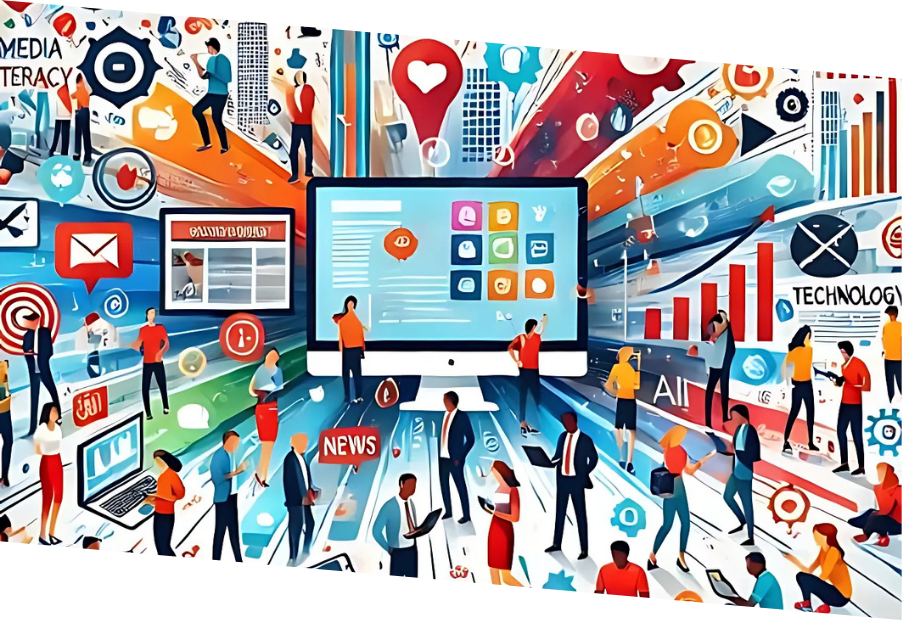
Image source: ChatGPT, OpenAI, AI generated illustration
Council of Europe (2024), Digital Citizenship Education (DCE), Media and Information Literacy, https://www.coe.int/en/web/digital-citizenship-education/media-and-information-literacy