We live in a world where political movements are born in comment sections, where strikes start with a tweet, and where everyone, even a child with a smartphone can spark global change. A hashtag can raise awareness, a short video can expose injustice, a meme can critique power. In the era of digital citizenship, one of its most powerful expressions is online activism.
This is not just complaining – it’s participation. This online phenomenon is called networked activism (Bennett & Segerberg, 2012). Decentralised individuals come together for shared causes using digital tools. Unlike traditional activism, which often required formal organisations, digital activism is scattered across large areas, fast, and fuelled by emotion.
Slacktivism or offline action catalyst?
In online culture, a counterpoint to online activism is called Slacktivism – the idea that liking a post or sharing a hashtag gives a false sense of achievement without real impact.
Despite that notion, online actions can truly be a gateway to deeper involvement. Tufts University (2018) study found that people who engaged politically online were three times more likely to take offline action later, such as donating, protesting, or contacting representatives. Liking and sharing activism-related content also boosts engagement, which eventually means more awareness for the topics.
Manipulating masses
Digital activism without critical thinking can become a double-edged sword. We might think we are amplifying justice, when, in fact, we are spreading a hoax or misplaced outrage. This is particularly concerning given that misinformation spreads six times faster than the truth on social platforms (Vosoughi, Roy & Aral, 2018). Therefore, being a responsible activist today means asking ourselves:
- Who made this content, and with what intention? Is the author trustworthy?
- Can I verify this message from a different credible source?
- Is there evidence provided? Are there statistics, quotes, or links to research? Are sources cited, or is it just opinions?
- Is this content emotionally charged, or is it fact-based? Does it aim to inform, or just to provoke outrage or fear?
- What cognitive biases might be influencing me? Am I more likely to believe this because it aligns with my views? (Is this confirmation bias in practice?)
Digital activism as a double-edged sword
Digital activism is powerful, but with power comes responsibility. A comment can start a positive social movement, such as rallying support for a good cause, or it can trigger a wildfire of misinformation that misleads others. In other words, sharing a post can amplify a good cause, or spread harm, either intentionally or unintentionally.
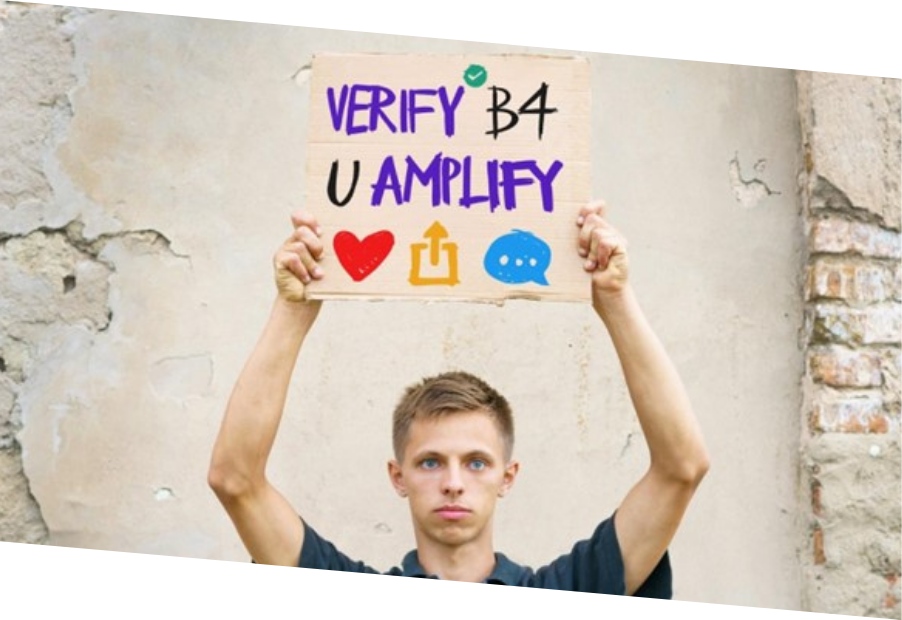
Whether we share, like, or comment, we are capable of shaping public discourse with every click. So when we get furious, we should be curious before we react. Remember, verify before you amplify.
At Digicity, we believe young people have the potential to be thoughtful and impactful digital citizens. Our goal is to support them in using their voices responsibly and actively online. Through games, guides and interactive experiences, we help educators and trainers equip youth with the skills they need to participate in digital spaces in a way that is safe, informed and meaningful. Because when used with care, digital activism can help make both the online and offline world a better place for everyone.
Curious how you can be part of this journey? Check out our materials and see what we are building together with Digicity!
Bibliography:
- Image source: digiQ internal database
- Bennett, W. L., & Segerberg, A. (2012). The logic of connective action: Digital media and the personalization of contentious politics. Information, Communication & Society, 15(5), 739–768. https://doi.org/10.1080/1369118X.2012.670661
- Pew Research Center. (2023, June 29). #BlackLivesMatter turns 10. https://www.pewresearch.org/internet/2023/06/29/blacklivesmatter-turns-10/
- Tufts University Tisch College Center for Information & Research on Civic Learning and Engagement. (2018, October 15). So much for “slacktivism”: Youth translate online engagement to offline political action. Tufts University. https://circle.tufts.edu/latest-research/so-much-slacktivism-youth-translate-online-engagement-offline-political-action
- Vosoughi, S., Roy, D., & Aral, S. (2018). The spread of true and false news online. Science, 359(6380), 1146–1151. https://doi.org/10.1126/science.aap9559